

Fuji X-pro1 manual lenses review
The Premise
Let us start by understanding the nature of cameras. Let’s say that you want to take a photo of your son, 5 year old and running like crazy. You have two cameras, both exactly the same as each other, except that camera A can go up to 12fps and Camera B can only do 3fps. Technically camera A is better than camera B for the shots of your son, BUT if you diligently apply yourself to wait patiently for the right moment, it really doesn’t matter which cameras you use. Some cameras are better than the others in some sections, like better handling, smaller build, higher fps, etc but in the end it’s all about ease of use and compromises, and if you accept compromises, the camera really does not matter that much (except for speciality purposes of course). All the 5 cameras reviewed are great cameras, and you must choose to get the one that will fit you the most, which features you cannot do without, which features you are willing to compromise. I like saying that the best camera is the one you love, and indeed you will be more willing to shoot and learn with a tool you love to use.
A warning
Before going on, I must say what this comparison is, and what it isn’t. This is a review and comparison of all 5 cameras only as M mount bodies, and mainly in a street photography or documentary photography setting, were reflexes need to be fast. So a camera might not be good with manual rangefinder glass but stellar with it’s own AF glass; and a camera might do bad in a street setting but excels in a landscape of architectural setting. So every comment must be taken with that in mind, that I am after Leica M mount glass handling in a street-documentary setting. Also I would like to point out that I am reviewing these cameras with a USER’s point of view. I might like a camera while it’s the opposite for another, so if you are looking into a camera, do your research first and take all points of views into account.
Fuji X-Pro1
[I]f you study the history of design, one thing will become abundantly clear: design trends tend to make a circle. Apple gets it’s design inspiration from 1960’s brAun, and nowadays camera manufacturers get their inspiration from analog cameras. One of the first digital cameras with a retro look is the Panasonic LC1, but I believe that the market was not ripe enough for it, it was bad timing. Olympus struck the heart with the original Pen EP-1 and the retro craze has been on since then. Rangefinder lookalikes are back, with no small thanks to the Fuji X100, with some adopters claiming “They couldn’t resist” buying the camera.But more likely than not, the X100 was a market test for something bigger, the Fuji X-Pro 1…. it had to be done. That camera really got a whole lot of buzz, and Fuji struck gold with a digital rangefinder lookalike. It has been reviewed to the max with all the proprietary glass (I must admit that they have a very appealing lineup for photographers) but I wanted to see how it did with M glass in the streets and against the popular cameras of today.

[Image quality]
I am really leaving the image quality up to you, I have some RAW files for you to download and judge for yourself, only you know what makes your cut. Personally I am really impressed with the quality of the files, everything is simply sharp and very well defined, and 16 MP is plenty for an APSC sensor also there is good dynamic range so you have wiggle room to play around with your images. I am no pixel peeper, and all the cameras compared are good enough for great photographs in my opinion, so my issue was more how does it handle in the streets with M glass then how the IQ is.
Judge for yourself with these Fuji Xpro Full size jpgs:


[Build/handling]
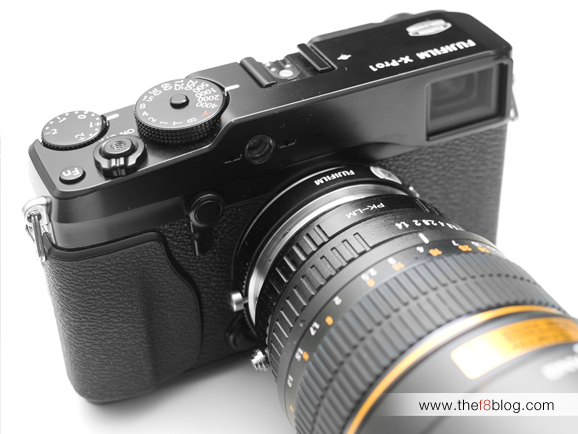
Having a rangefinder that shares the same body as a Bessa 2, I must say that I was kind of underwhelmed by the build quality compared to a real rangefinder, but I quickly fell in love with the camera when I was out shooting. The thing looks good…. you can use it as a pick up tool …”Hey baby, you look as good as my camera!”…. more seriously tho you might get some compliments like “THAT is a cool camera”, etc. But being behind the viewfinder, the handling is more important than looks and everything must be in reach in other not to intrude vision. The camera is simply a large rectangle with a raised grip on the right, I wish it was twice as big but at least it has it.


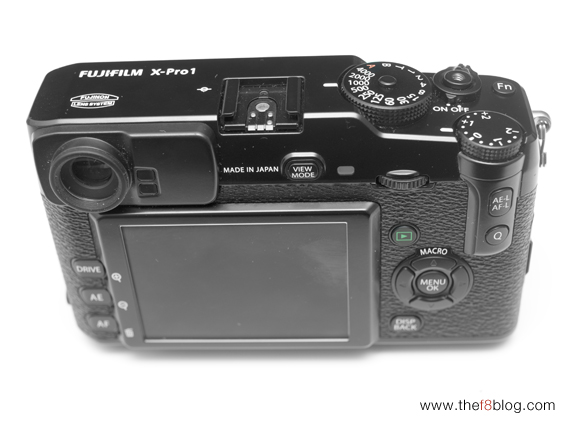
The camera is designed for your 3rd finger to stay on the front lever, your index on the shutter, and your thumb resting in a nice corner behind the camera. The thumb rest area gives you quick access to the EV dials (a GREAT placement for on the fly exposure compensation), a jog dial for various uses and a very useful Q button that displays all of your current settings. AEL is also in thumb’s reach. You can access your shutter speed dial with your index and thumb really fast. The litmus test for camera handling IMHO is would you be afraid to drop it if there was no strap attached….the fuji x-pro passes that test with flying colors, you have a good grip on the camera. I do believe that the shutter release button has kind of a weird feel to it but that’s no big deal.

[The viewfinder]
When the X100 was out, there was a whole buzz about a Hybrid viewfinder that I passed over because I thought it was silly marketing wordplay…. turns out it’s a real innovation. Basically what you have is an optical viewfinder with the possiblity to replace it with an electronic viewfinder with the front camera lever (used to be the timer in older film slrs). The framelines in rangefinders are lit by a white window but in the Xpro (and presume all of the x series) the framelines and other info are all electronicly lit. I had a WOW moment when I saw the histogram superimposed on the optical viewfinder, it was like a glimpse at the future…. the kind of stuff you can expect to see on cars windshields with superimposed rpm and speed. The EVF is an EVF like any other camera, but it is impressive that the same viewfinder has both OVF and EVF.

[Adapter]
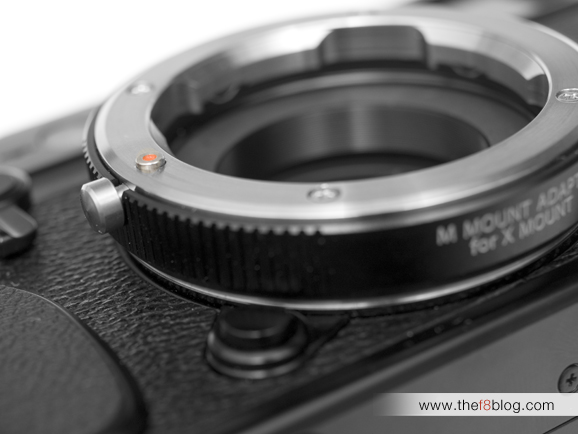
The adapter I used was the official x to m mount from Fuji themselves. A nice thick and sturdy adapter that can communicate with the camera. The electronic stuff in it is for a little button on the adapter that brings up a menu for custom M mount settings. This is very nice, you can have 6 lens profiles saved in the camera with corrections for barrel, pincushion, colour correction and vignetting. You can only change the focal length on 2 of the slots, the other 4 are locked to certain focal lenghts, the framelines automatically adjust to the focal length in the OVF….Impressive…


[Focusing]
The camera has a great handling for the streets, but where it falls WAY short is the focusing. And again please remember that I am only speaking about MANUAL focus lenses. The Fuji Xpro is not a real rangefinder, so the lens does not communicate with the camera… that mean that OVF is irrelevant for focusing. You could put the OVF for good use, and use it for framing after zone focusing, but the hiccup is that everything almost disappears when you are in bright light, framelines included. So with manual glass you are stuck with EVF, and there is another hiccup: it’s hard to focus. If you look at tattooed man in the “taken with Fuji xpro section”, the guy was standing in front of me, immobile, and I could not hit 1.4 on his eyes to save my life….imagine in a street setting where people are moving and so are you. You can have a magnified image with the Xpro but I am against all forms of magnification, I find it way too distracting. But others are fine with it thought.

[Street handling]
I quickly realized my dilemma here, I could not use OVF, and neither could I use EVF…. I could not even hit f8 on a darn TREE that was near my place. You are just never sure the thing is in focus with the EVF, so Lightroom is always a nasty surprise. There is a trick by following the moire patterns but it is a very bad replacement for focus peaking. So my only option was zone focusing for street. I am not good with distances so I simply played it safe and stopped down to f/16 on infinity to have everything from 1.5 meters in focus. Such a small aperture needs generous shutter speeds, witch I would not allow because I am fast and needed some wiggle room for fast shooting….so I was left with leaving the ISO with the camera. If there is something that came to my head it is that I missed my Ricoh GRD, where I did not have to deal with depth of field that much because of the small sensor size.
I tried zone focusing on infinity and using the OVF and it is a nice setup if you forget about your framelines and relevant information. My only issue with the viewfinder is that I expected 1:1 viewfinder and the Xpro hasn’t one, so make sure you know where you are walking. I really felt limited in the streets stuck at f/16 ranging between [0.7-1.5] and [1.5-infinity], even more knowing that if I wanted a detail shots or shallow depth of field I would probably miss. When I focus on something with 1.4 I have to bracket my focus, but sometimes the class 4 SD makes the camera lag seriously when the buffer is filled. I must say that focus peaking is a TRUE deal breaker here, everything would be easier if the camera had that feature. I kind of wish that I had X mount glass because I am sure that it would kill in the streets, but manual lenses suck on the camera.
Sample RAW files
Click image to download Raw file. Requires Lightroom 4 or CS6 I believe.
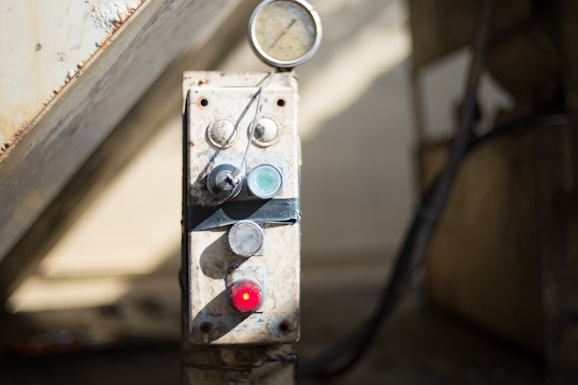
This one is mainly for you to play with recovery/dynamic range



Taken the Fuji Xpro1
I saw this man coming from afar. Tats? Check Rosary? Check. I had to get this man’s portrait, and I did. I barely had the Xpro for long and I was sweating because I knew I was going to miss my focus, and I wanted a 1.4, so I simply bracketed my focus and hoped for the best. While looking through the viewfinder, I forgot that I was in EVF mode and I saw light spilling on the frame, I freaked out because I was like how the HECK do you get this on a rangefinder? Is it even possible? I eventually incorporated it in the frame and hoped for the best. It was the only one sharp out of all the frames.

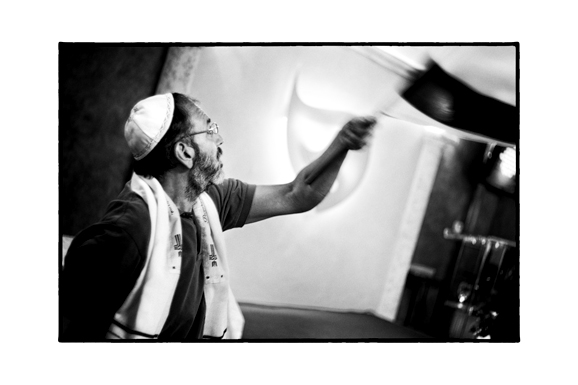
The way this jewish man was waving the Israeli flag, I knew I was in for trouble, I basically prayed and sprayed, just trying to get his face in focus, it didn’t turn out that bad.
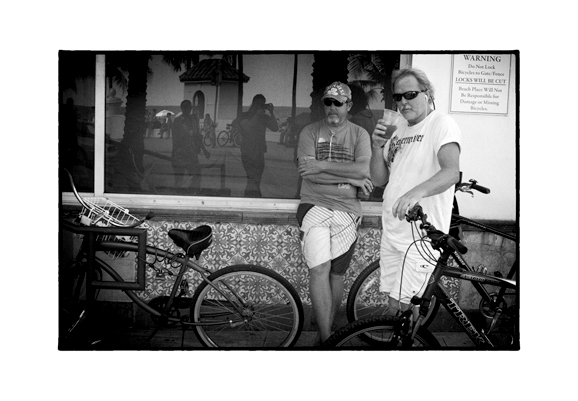
The depth of field really played well for this image, they were giving out free redbulls in the street

Knowing that I was too fast with the camera, I simply slowed down for each shot, not quite my style though.
In order to get this shot, I shot many frames because I knew not to trust the EVF that well. I got this one in focus at f/4 I believe
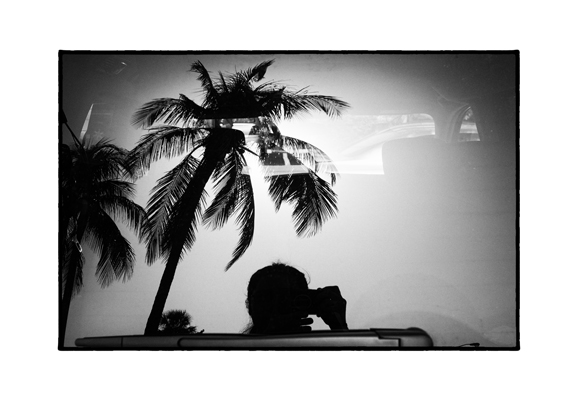
The one below is simple zone focusing on infinity, no sweating over the focus there.
Strengths / Weaknesses
+ Great handling
+ Quick changes with dials
+ Q button
+ Great IQ
+ M mount lens corrections
– Not 1:1 viewfinder
– Useless OVF for manual focus
– Useless OVF in bright light
– No focus peaking
– Hard to manual focus with EVF
[Verdict]

The Fuji Xpro with manual focus lenses was not a good experience. But pop in the X mount lenses and this is a little beast. Get it if you are comfortable bracketing your focus, zone focusing or focusing with a zoomed in image if you are planing on using manual lenses on it.
[Where to get it]
Get it here from Amazon