
Wondering who invented street photography? It’s not quite as simple as that, but read on to find out the fascinating history of street photography and also…Leica. Let’s dig right in.
This is part of the street photography questions series where I answer all the beginner street photography questions I can find.

The definition problem
Before answering who invented street photography, we have to get our definition straight. If I asked you if something was a portrait or not, it would be pretty simple to figure out what is and what isn’t, correct? You look at the image and figure out if there is someone’s or something’s face in there to determine that.
This is not so simple for street photography. Consider the issue if you stayed inside the streets and shot inside a store…is it street photography? Or what if, if you lived in Miami for example you shot the beach while in the streets, is it street photography?
Or what if instead you stayed on the beach and shot someone at the beach, is it beach photography? Of course not, that is why one of the best alternative names for street photography is “life” photography. Because it is about life in general, and not something specific like a landscape or portrait.
Who invented street photography?
If we keep in mind the definition of street photography, nobody did. It just happened naturally because people were shooting their own lives as soon as they got a camera. In a very real way, it just happened.
Who invented street photography could be attributed to Louis Daguerre invented because it all started with him. He’s the one that invented a process to fix an image to a plate in a matter of minutes (Niepce’s process was 8hours / days).
So with that technology came the possibility of somewhat street photography. See for yourself:

Where’s the people you asked? Blurred out. Because this was early photography and minutes long exposure meant that people just moved and had no time to be recorded…except that person getting their shoe shined because they had to stay still and it was long enough to be recorded.
This shows you why it was practically impossible to do street photography as we know it because you needed to have a monster camera with you, and you needed to have minutes of exposure, and that simply didn’t work because life in the streets is fast.
But there is also another issue, the one of intent. You see, yes you could credit Daguerre as inventing street photography, the issue is, he probably didn’t INTEND to. And that is critical.
The first street photographer
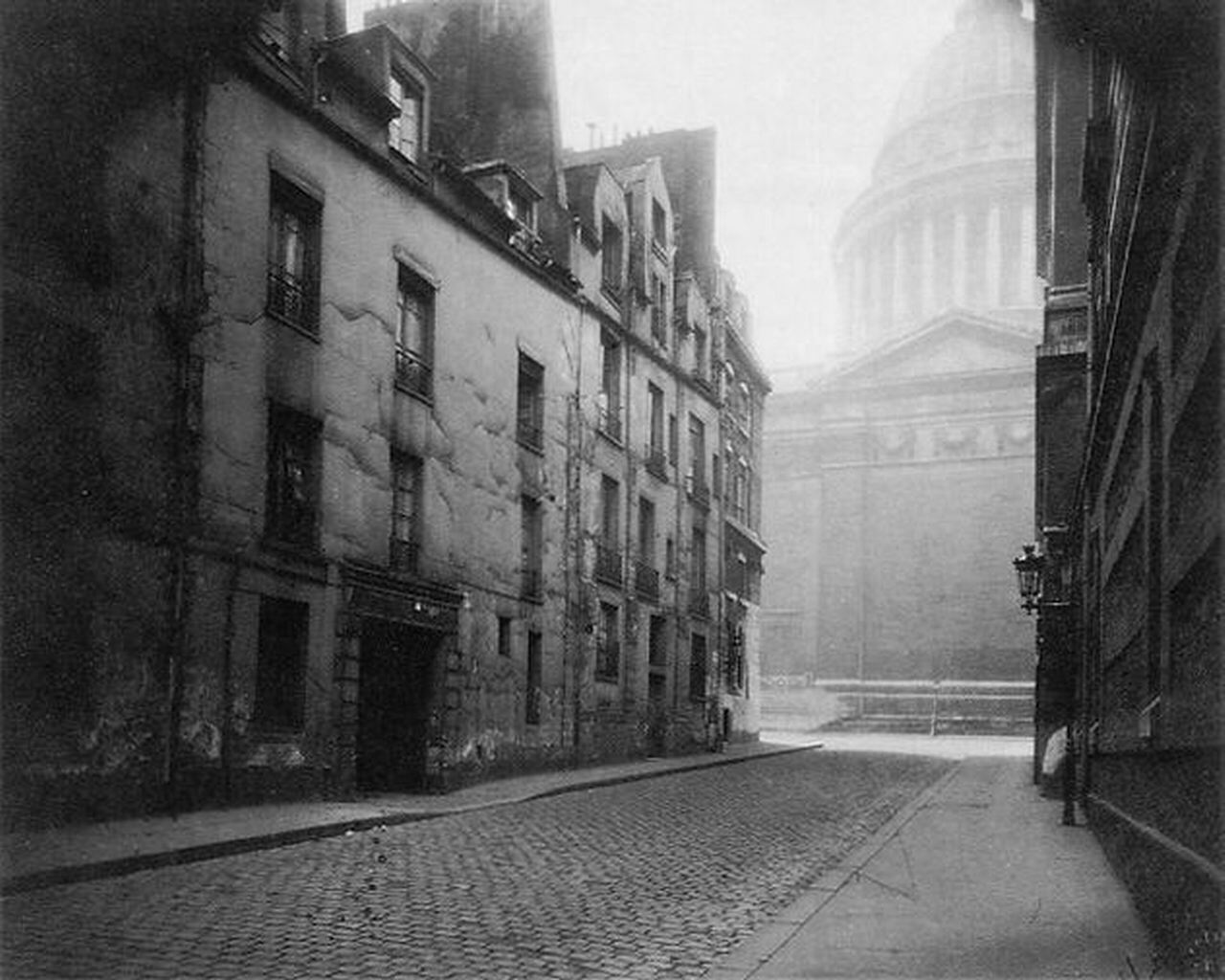
Many believe one of the earliest street photographers to be Eugene Atget. He had a tremendous influence on a famous street photographer Berenice Abbott. But here’s the issue here, he didn’t set out to do street photography but to document references for artists. The lack of intent is really why we can’t pin him as the first, and not because there is no humans in most of his shots:
Who then is the first street photographer? The one that REALLY intended to do street photography? John Thomson. He is behind a book called street life London, and if the title of his book wasn’t clear enough…he said himself that he set out to shoot a series of photograph ‘taken from life’ . Life photography, rings a bell?
Here’s some of his photographs:
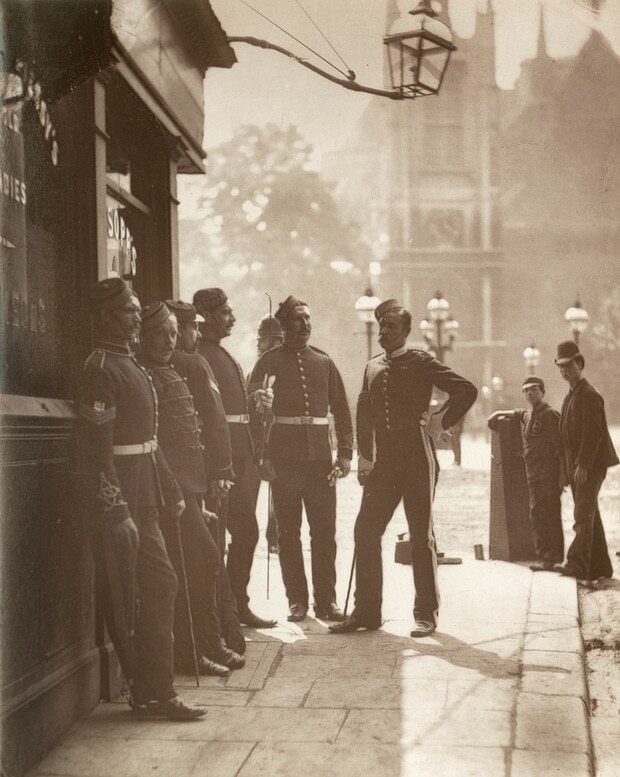


All of his images scream “life” and that’s exactly why he is usually seen as the first street photography. But these images, while they have people in them, still required a lot of equipment to carry around, so street photography STILL wasn’t really viable, so let me deposit another contender.
The first MODERN street photographer
If we are talking about who invented street photography, one could say Thomson and for sure he probably did. But here’s something to chew on: Street photography is intrinsically linked to the compact camera.
Yes Thomson did shoot and indented to shoot street photography but it wasn’t viable. You needed to haul a large plate camera, set it up, shoot. By that time, it was anything but candid. It’s like bringing an elephant to a porcelain shop and hoping to be silent.
Enter Oskar Barnack. He worked for Leitz and loved to walk and hike. Being frail the idea of transporting those plates everywhere didn’t particularly excite him. As an avid videographer he needed to test his exposures so he made a small camera to shoot film so that he can develop and confirm that his exposure was spot on.
He eventually wondered why not make a small camera that could shoot the readily available movie film? And that was the birth of the 35mm film as we know it. Barnack created the “Ur Leica”, the smallest camera that took regular film.
We are spoiled with our camera phones nowadays so it’s hard to understand the significance of this as cameras at that time were very large and bulky. Here’s some surviving photographs:

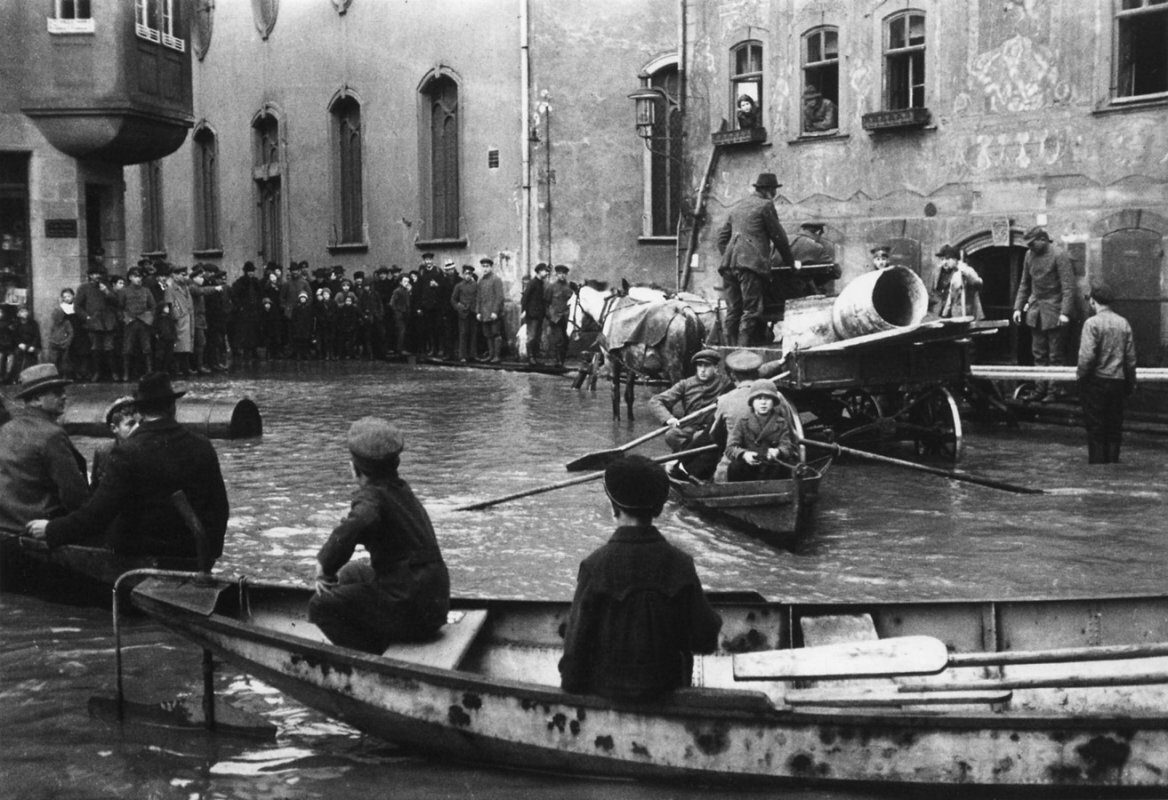
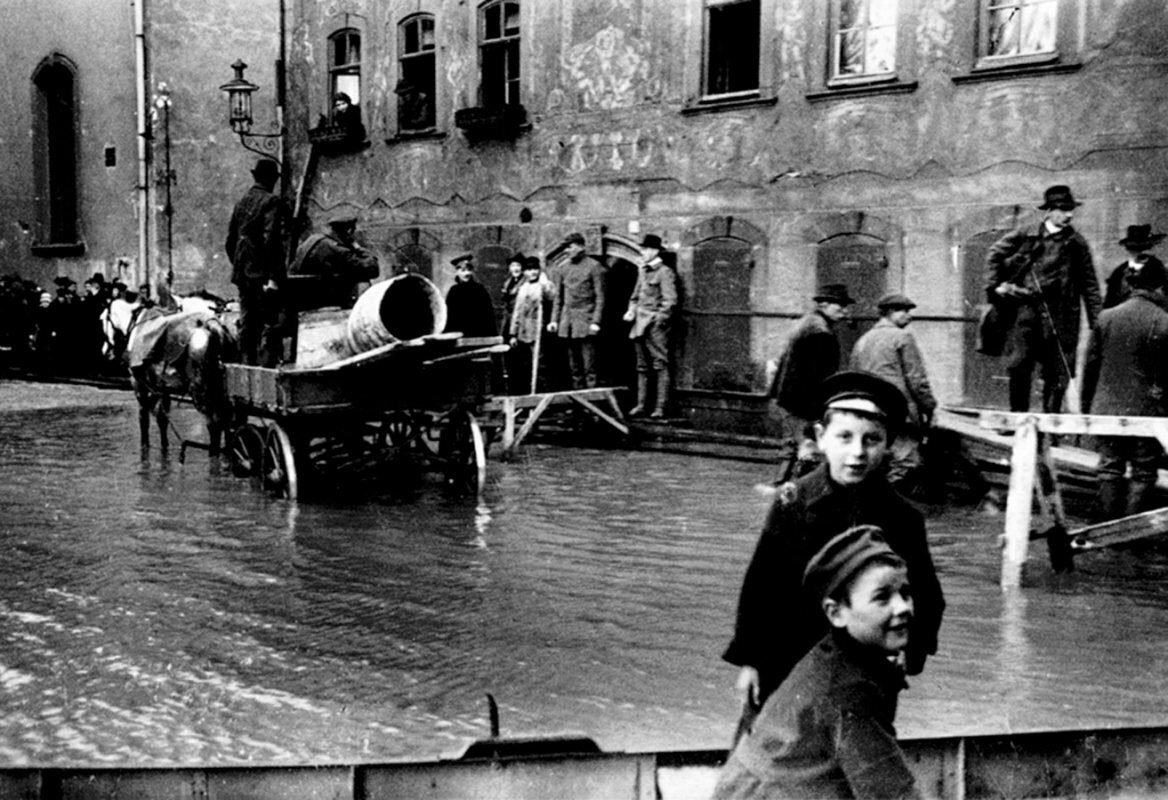
This is the birth of modern street photography because it was the first time a small camera was available that didn’t need a tripod and could be shot candidly. Plus you could finally have shots taken from odd angles because the camera was so small to handle.
Now comes the issue of did Oscar intend to do street photography? To which I answer yes.
He probably wouldn’t consider himself a street photographer but the intent to document his walks is pretty much the definition of life photography, isn’t it?
Conclusion
Who invented street photography? Technically Louis Daguerre, but the first with intent was John Thomson and the one that invented modern street photography as we know it is Oscar Barnack. The problem of attribution comes from the definition of street photography as it very often means different things for different people.
Since you are interested in street photography, check out this course here. It’s the most insightful online street photography course you’ll find with hundreds of happy students. It covers everything from composition to psychology, and gives you to keys to make exceptional street photography.