
If you are looking for a Ricoh GRD IV review, look no further. I’ve been shooting the Ricoh GR Digital IV for the last 10 years and I still shoot it to this day. Here’s everything you know about it.
- Ricoh GRD IV introduction
- 10 Years: the ultimate Ricoh GRD IV Review
- The best ergonomics on a compact camera
- Hand gymnastics
- Manual controls
- Flash
- The small sensor look
- There’s something about the black and whites & colors
- The best raw files from a tiny body
- It has it’s rhythms
- Bring on the grain
- The fast lens
- The Ricoh GRD IV is the camera killer
- The holy grail of focusing
- Image quality still holds up
- Ricoh GRD IV street photography
- Street Photography settings
- For everything else
- What are the cons?
- Accessories
- Where to get one?
- Conclusion
introduction

| Reasons to buy | Cons |
|---|---|
| + Small sensor look + Legendary handling + Great dynamic range + Snap focus |
– Bad colors at higher ISO – Getting rarer |
A long time ago I’ve been plagued by serious Gear Acquisition Syndrome. I purchased cameras left and right, not even shooting with them nor enjoying them, until I stumbled upon the Ricoh GRD IV.
To be precise, I got the III and then the IV but both are so similar that in my mind it is just a blur.
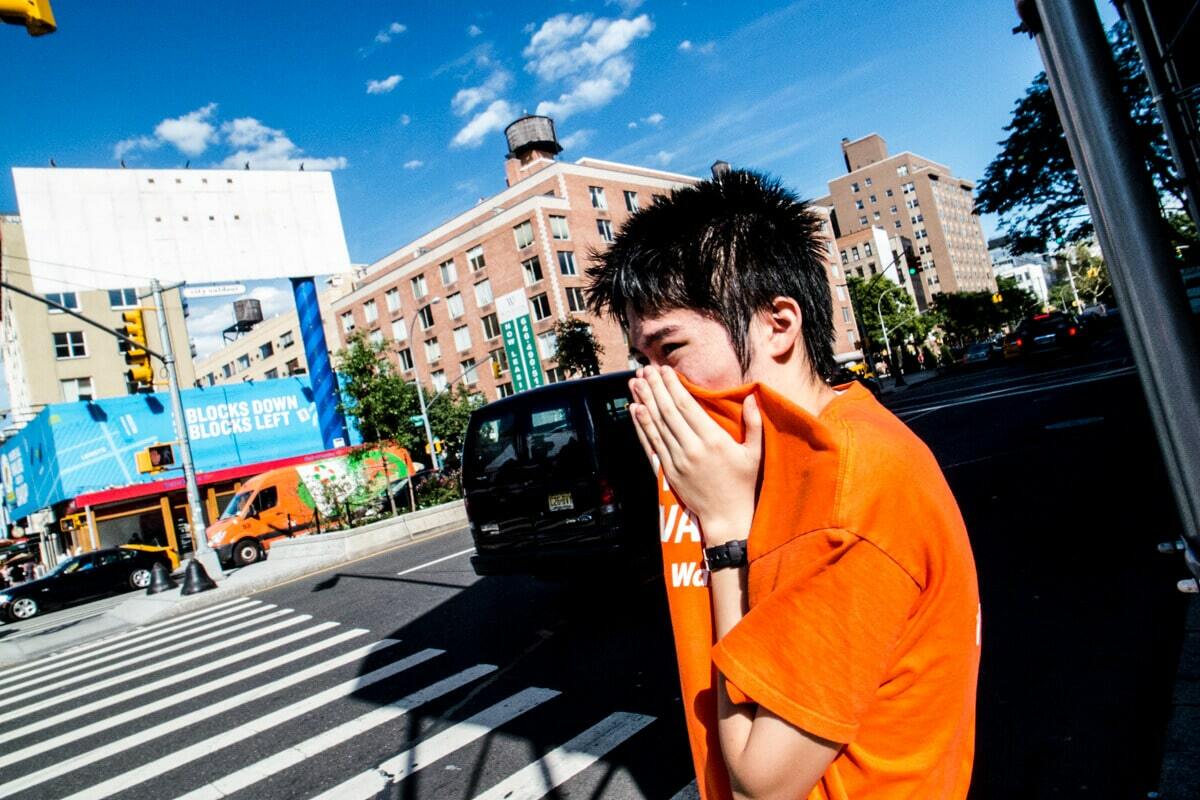
I’ll credit this camera for saving my photography because after purchasing it, my camera habit went down to the point that I became a gear minimalist. I just have the bear minimum to shoot professionally.
About 95% of my personal fine art photography over the past 10 years have been made with the Ricoh GRD IV. So yes, this is a special camera. And if you are interested in it, read on.

10 Years: the ultimate Ricoh GRD IV Review
Before getting into this Ricoh GRD IV review let’s get something straight first:
Ricoh GRD ≠ Ricoh GR.
The Ricoh GRD line was a line of small sensor cameras, while the GR line is one of the smallest APSC sensor cameras you can get. The GRD line is defunct, the GR line continues.
I am sure when Ricoh announces the Ricoh GR IV, confusion will abound. If you want to make sure which is which, the Ricoh GR Digital IV has a little window on the top left corner of the lens.

Speaking of GR, ages ago, I remember the buzz in the streets. Ricoh was to announce a new camera, the Ricoh GRD V and everyone was excited, including me. But I never upgraded, the GR was simply too different in terms of ergonomics and image feel for me so I stayed with the GRD IV.
I’ve shot this camera everywhere, the images here are mostly shot in in New York, Miami & Haiti. I’ve processed these images with the presets you can find here.

The best ergonomics on a compact camera
Simply put, the ergonomics of the Ricoh GRD IV are legendary. I’ve had many cameras over the years and none match the GRD IV. And yes I’ve even had the Ricoh GX200, and even the newer GRs and let me tell you that it is not the same thing.
What’s the big deal you ask? I’m no industrial designer but here’s my observations:
- There’s the weight, it’s perfect. Not too light to feel cheap but not too heavy that you don’t want to carry it.
- There’s the grip, it’s so good that you are not afraid of dropping the camera.
- There’s the slant in the front, perfect for your index to rest and be ready to change a setting on the fly.
- There’s the shutter release button that is pill shaped. While that might not seem much, that shape is probably the best one, you never yearn for something like a soft release because it feels like one.

I might be the fact that it is elongated, might be because it is slightly taller in the middle, I don’t know, but if you start using any other compact camera, you can feel the difference immediately.
- Lastly, on top there is a mode dial with a lock. This mode dial has rarely ever budged in a decade because in order to change the mode you need to actively press the little button that is near it.
Hand gymnastics
But hey it’s not about how a camera feels in your hands, it is how you use it. That whole shebang about ergonomics means one thing: It allows you to twist and flip the camera however you want and get the shot.
This is really important for those who want to have the odd angles in street photography, as there’s some shots I would never have gotten with a large DSLR.

Manual controls
When it comes to compacts, they usually omit manual controls. Certain cameras have it but only one dial, making on the fly adjustments pretty hard. The Ricoh GRD IV on the other hand has a dial in the front and a lever in the back. That means you can always have your shutter speed and aperture controls right at your fingertips.
For the ISO you can simply press the lever in the back and then use the front ring to select your ISO from ISO100 to ISO3200, and then press the lever again to implement the changes.

Combine the perfect grip and the manual controls and that means someone can tie your hands in the back and without ever touching a menu you can change your aperture, shutter speed and ISO easily.
Flash
It has an integrated flash. Bid deal indeed. But if you are into flash street photography it’s pretty neat and unlike many more modern compacts (the newer GRs notwithstanding) it still features a hotshoe so that you can attach a flash on there (or a viewfinder, see the accessories)
The small sensor look
Technically speaking, when it comes to cameras you want the large sensors. Cleaner images, more megapixels. But the issue here, is that if -like me- you like your images with grit, the cleanliness and “clinical look” of larger sensors throw you off.

This is especially true if you do street photography and want that gritty look, it is just hard to get with large sensors. The GRD IV has a 1/1.7″ sensor and when you put this baby in black and white there is a certain signature grit to it that have yet to see in any other camera.

Just like under the right conditions there’s a certain look to Leicas, there is also a Ricoh GRD look due to the small sensor. It really comes alive in black and white and there’s something about it that I’ve always tried to replicate but never could in any other pocket camera.
There’s something about the black and whites & colors
Like I said above, there’s something about the black and whites with this camera. There is only one other camera that I had this feeling with, the Epson R-D1. And there’s something about the colors too.

Even when I try my hardest to have the colors as bland and straight as possible, there’s still something about them that gives a unique rendering. I’ve tough long and hard on what it could be and I settled on the fact that it is probably due to the CCD sensor, because the EPSON RD-1 and the GRD IV both share a CCD sensor while most modern cameras have CMOS sensors.
So yeah, both the black and white and colors have a pretty unique look to them.
The best raw files from a tiny body
If this sounds like a biased Ricoh GRD IV review yet, it because it is. And I am trying real hard not to sound like a fanboy because, well I am! Anyway. Onwards.
If you shoot situations where there’s lots of contrast, chances are your image will have to be over or underexposed and there’s nothing you can do but recover in post.
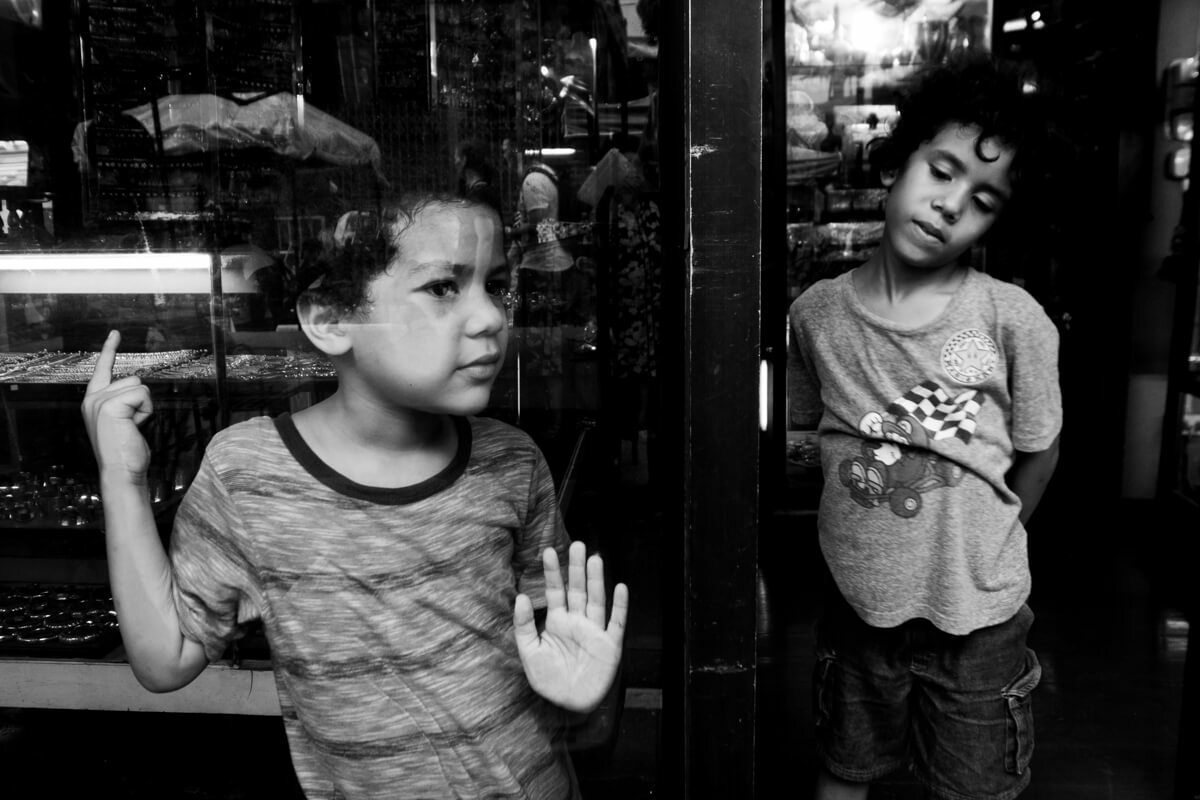
Well the GRD IV shoots some killer raw files. Often my heart drops when I see a part of the image clipped only to find that there is still some data left to recover. One of the Achilles heel of digital cameras is that they rarely handle highlights well, sometimes the amount of recovery I can get from the GRD IV raws are outstanding.
Just look at the highlight here:

It has it’s rhythms
Let’s face it the Ricoh GRD IV is old. And one of the issues here is that we retroactive our expectations on older gear, we expect it to shoot like modern cameras with their lightning fast AF and huge FPS.
The Ricoh GRD IV is not the fastest at AF, it takes a moment to lock on the focus, but it has a special mode that bypasses this (see below). As for FPS, well it takes about a fat second / second and a half to fully cycle.
So you will not be able to do street photography where you are shooting seconds worth of images and selecting the best one. Nopes. That is why Ricoh GRD IV street photography is deliberate.

It has its limitations in terms of speed so before you even shoot, knowing that you have a second or two before you can shoot again forces you to really pay attention. The good thing is, this camera has a rhythm that if you stick with, will make a killer combo in the streets.
You learn to pick up the cues. It’s almost like a sound, I shoot, wait, I know exactly when it will be ready again because of the rythm.

Bring on the grain
When you ramp up the ISO, not too much of course because this is still a small sensor, it makes the images have even more character. Well, at least in black and whites because when the ISO is pushed in the colors, everything looks digital-retro, like it was shot on a low quality digital camera of the 2000s.

So I would really not use it too much for color photography as the colors lose their charm when the ISO goes up.
The fast lens
If you don’t like to being the grain, don’t. The Ricoh GRD IV has a f1.9 lens that is a fast puppy. I’ve been in very low light situations and I barely needed ISO400 to shoot. This is also where the small sensor shines if you like lots of depth of field, you get a lot in focus for apertures of f1.9, f2.8, etc.
The Ricoh GRD IV is the camera killer
The Ricoh GRD IV was released in 2011. Don’t think I haven’t tried to get rid of it. I tried, many times. And the irony of it all is, the other cameras are the ones who end up getting the axe. Like my friend Don says (we do this magazine together) the Ricoh GRD IV is the camera killer, and I will have to concur.

Not even Ricoh offerings can beat it, from the GX200 or GR to the GXR S10. The Panasonic CM1 and LF1 that I love didn’t fill the gap either so after years of trying I gave up trying to find a replacement.
It always feel like I am trying to force myself to get something else while I already have it. So the GRD IV has been by my side for about a decade now and if it dies, I’ll get another one. There just ain’t another choice, I’ve tried too many times to get rid of it and proved unfruitful.
It’s always the same scenario:
- Get new camera.
- Not the GRD IV in terms of handling but I do with it
- I forget the GRD IV
- I come back to it for a day and shoot
- The other camera goes to ebay
I don’t know how many times I’ve done this so you can be pretty sure I’ll probably be shooting this for life.
The holy grail of focusing
If there is one thing that street photographers have to deal with that most other genres don’t is focusing. It’s a pretty complicated matter as you have to balance available light, speed and aperture.
So it is always a juggle between automatic, zone and hyperfocal distance focusing. Ricohs have one advantage above any other camera, and that is their full press snap focus feature. To make a long story short, snap focus is simply manual focus with an indicator of how much will be in focus.

Big deal, right? Well hold on. The magic here is FULL PRESS SNAP. That means your camera can be in fully automatic mode, but if you press the shutter button fully (vs half pressing so that if focuses first, and then fully press to take the shot) you can set the camera to immediately focus to the1, 1.5, 2.5, 5 meters or infinity distance.
That means you always have two focus modes at your disposal. Autofocus (or another mode) AND zone focusing just by either half pressing or fully pressing the shutter release.

This makes street photography more straightforward. Am I or my subject static? I can simply do autofocus as normal. Am I or my subject moving too fast? Make sure they are at 1m or have enough aperture so that everything is well in focus and full press the button.
Just like if you want that magic hybrid viewfinder you need to go Fuji, only Ricohs have this full press snap feature. And because this is a small sensor camera, you don’t need to have small apertures to have a lot in focus. I can hit everything at f1.9 but again, I’ve been at this quite a while.
Image quality still holds up
I’ve been shooting this baby for 10 years and I can tell you that the 10 megapixels and image quality still hold up. Two caveats. You can forget video because it’s worse than you think (640 x 480 resolution) and if you are into color, it simply isn’t that great when the ISO starts going up.
As for black and whites, if you are looking for grit, this camera has it. If you like clean images, maybe the newer Ricoh GR will fit the bill better.
Ricoh GRD IV street photography
If the 28mm focal length didn’t clue you in, the GRD IV is made for street photography. Heck, Ricoh is one of the only camera manufacturers that unapologetically make cameras for street photographers. And if you want one with small sensor the GRD IV is it. It’s prefect for street and when you shoot nobody pays any attention to you and you lil camera. Check out some Ricoh GRD IV street photography:


Street Photography settings
Here are my Ricoh GRD IV street photography settings. I’ve been using the same for about 10 years and it allows me to focus on the streets and change to snap focus on demand.
| Name | Value |
|---|---|
| Mode | Manual |
| AF Mode | Multi AF |
| Snap focus | On |
| Snap focus distance | 1m |
| Image Quality | RAW 3:2 |
| Image settings | Black and white |
| Aperture | f3.5-f5.6 |
| ISO | 100-400 |
| Shutter Speed | No lower than 1/125th |
For everything else
Photography happens wheter you are ready or not. Hence having a camera in your pocket is a great way never to miss an opportunity. A lot of my best images have been made when I wasn’t explicitly “out there” looking to shoot images.
I’ve made some of the finest photographs of my life with this camera, some that will end up being sold, some will end up as gifts to my kids when they grow up. And no, it is not the same thing as having a phone in your pocket.

The best camera is not the one that’s with you but the one you love. Because while I like my phone, I hate to use the camera, I just don’t like the way I hold it, the lack of control and whatnot. So I don’t like using it. And those blown highlights are blown out forever.
The GRD IV on the other hand I love using and it helps me create great photographs as I live regular life not because it is simply present, but because I gravitate towards it. Your images get better if you have a camera that you actually WANT to use vs one that is just there.

What are the cons?
I’ve been tryin real hard in this Ricoh GRD IV review to be balanced in my approach. And you probably didn’t see too many cons. This is because the GRD IV is the best camera but only for the RIGHT person.
I constantly get emails thanking me for how much people like their Ricohs (hear that, Ricoh? Sponsor me!) But I also get a few emails that simply don’t get what the fuss is about.
The only universal con is that this (very rarely) can turn on in your pocket, and that’s it. If you are the kind of person who wants wifi, video, clean images, bokeh and all of that stuff, consider this the bottom of the barell.
But if you do reportage photography, street photography and love gritty images, this is the best camera ever and there is none like it. Like I said way above in this Ricoh GRD IV review, I’ve tried to get rid of it an failed.
Either the handling wasn’t the same, the images didn’t have that je-ne-sais-quoi, or lacked the charm.
Accessories
The GL-1 front cap
The Ricoh GL-1 (ebay) is probably the only accessory that is really worth it. Because if the Ricoh has a flaw it is that it occasionally hits something in your pocket and tries to push the lens while in there. This can of course damage the camera. This cap presses a few connections in the front and the camera will never turn on while it is there. Quite rare nowadays.
The extension tubes & 21mm
These two attach to the front of the GRD IV and transform the 28mm into an even wider 21mm. The GW-3 is the lens, the GH-3 is the tube. While cool this defeats the pocketability of the Ricoh GRD IV so even tough I had it for a while I sold it because this was extra things to carry and the focal length wasn’t wide enough to justify the hassle. You need the tube for filters however.
The viewfinders
Ricoh made two viewfinders, compatible with all the GRDs and GR, the external viewfinder and mini viewfinder. To be honest I never understood the appeal of this because it hinders the camera going in your pocket, but it does make for a cheap Leica 21/28mm viewfinder if you have one.
Yes I say 21/28 because the larger Ricoh GV-1 (ebay) has framelines for both while the smaller Ricoh GV-2 (ebay) has only 28mm framelines.

Where to get one?
The Ricoh GRD IV is a cult camera and it only gets more expensive by the day. I remember when Ricoh announced the follow up and then everyone flooded ebay with their cameras and they were cheap back then.
Not anymore, these are pretty sough after nowadays and the price only goes up, because of supply and demand.
There is no more GRD IV being made, they have not been made for probably about a decade so the supply is limited, ergo the prices you get today will be the best prices you will ever get. Get it on ebay.
Conclusion
I hope you’ve enjoyed my Ricoh GRD IV review. I’ve shot it for about 10 years and it is one of the best cameras that I’ve ever used. It is safe to say that if I didn’t shoot professionally all I would use is this.
It is not for everyone, but if you are into gritty black and whites, this is an amazing camera(ebay).
Also if you want the keys to street photography, this course teaches everything I know on the subject from composition to post processing. Click here to check it out.
Be yourself, stay focused and keep on shooting.